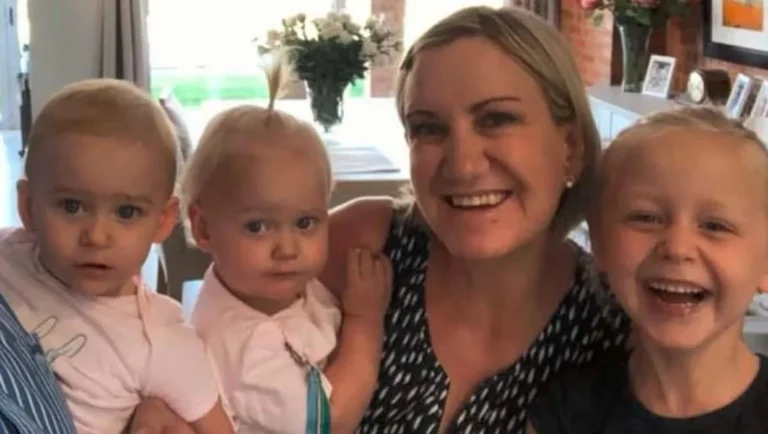
Timaru is a picturesque port city on New Zealand’s east coast, known for its agricultural exports and coastal views along Caroline Bay. In 2019, it became the new home for Graham and Lauren Dickason, a couple from Pretoria, South Africa, who had met in 2005.
Lauren was a doctor, known for her genuine care for patients. Graham was an orthopaedic surgeon, outgoing where Lauren was introverted. They married a year after meeting and settled at The Wilds Estate outside Pretoria. The couple struggled with infertility and turned to IVF, enduring 17 failed rounds before Lauren became pregnant in 2013. Their daughter Sarah was born prematurely at 18 weeks and died shortly after. Lauren stepped back from medicine, though she continued assisting Graham part-time.1
The couple later conceived using donor eggs, and in 2014 their daughter Liane was born healthy. A friend, Natasja le Roux, recalled Lauren as one of the kindest people she knew. In 2018, Lauren became pregnant with twins, and Karla and Maya arrived in 2019. Graham later said Lauren never treated the donor-conceived girls as anything other than her own.2
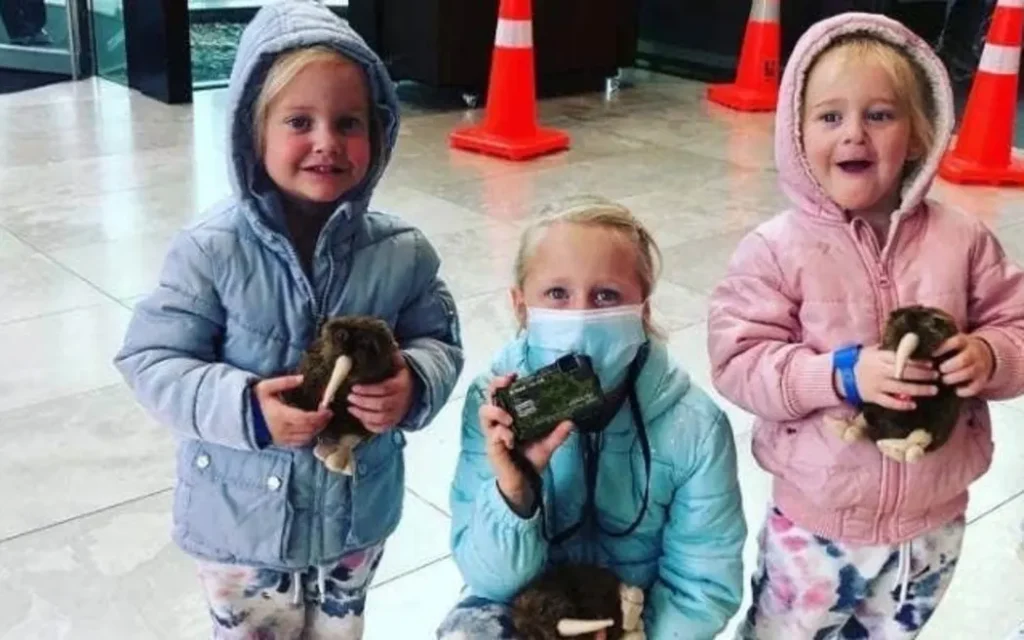
In 2019, the Dickasons decided to relocate to Timaru after Graham secured a position at Timaru Hospital. COVID-19 delayed their plans, but the family finally flew to New Zealand in August 2021. Liane was six; Karla and Maya were two. Liane doted on her younger sisters. Maya carried toys in little handbags, earning her the nickname “little bag lady.” Karla, born with a cleft lip that required multiple surgeries, was considered the brave one of the three.
The family spent two weeks in hotel quarantine, which Lauren and Graham documented cheerfully on Facebook. They were released on September 11th and began settling into their new home. Graham made friends quickly at the hospital, and the family felt welcomed.
On the 16th of September, 2021, two-year-olds Karla and Maya had their first day of preschool, a day after six-year-old Liane started school. Despite limited schooling during the pandemic, Liane made a strong first impression on her teacher. After school, Lauren took the girls to the local botanical gardens. There, another child photographed them without permission, and a shaken Lauren gathered her daughters and went home early, questioning whether the move to New Zealand had been the right choice.
That evening, Graham left for a work function around 7PM, kissing Lauren and the girls goodbye. It would be just the three of them for the night.
Graham returned home just before 10PM, expecting the girls to be asleep. The house was unusually silent. In the kitchen, he found Lauren looking disoriented, “wobbly,” as though she might collapse. He asked if she was okay. She didn’t answer. Her expression, he said, was one he’d never seen before. When he pressed her, she said only:
“It’s too late.”3
Graham ran to Liane’s room and found her pale and cold, a zip tie pulled tight around her neck. He tried to wake her, then rushed to Karla and Maya’s room and found them in the same state. He carried Liane to their room, grabbed scissors from the kitchen, and cut the ties from all three girls. It was too late for each of them.
Lauren appeared moments later, walked to Liane’s bed, and lay down.4
Graham fled the house and alerted neighbours, then had a colleague call police, as he didn’t know the New Zealand emergency number. Constables Alexandra Schrader and William Turnbull were first on scene. They found cut cable ties on the floor and Lauren semi-conscious in Liane’s room, having overdosed on tramadol, with superficial cuts on her arm. In the next room, officers found Karla and Maya in their beds with a stuffed toy, and Liane on the floor nearby. All three girls were beyond resuscitation.5
Lauren was taken to Timaru Hospital in stable condition. Police announced the murders were an isolated incident.
Lauren’s parents, Wendy and Malcolm Fawkes, released a statement expressing devastation and asking for privacy. Timaru’s South African community rallied around Graham, and a memorial of flowers, cards and teddy bears grew outside the family’s home. Community organiser Martin Reyneck spoke of shared grief reaching South Africa.6
With no family nearby and only weeks into his new job, Graham had little support network of his own. The day after the murders, Lauren was released from hospital and charged with the deaths of Liane, Maya and Karla.7
The killings shocked the country, and many struggled to understand how a mother could do this. Friends and former neighbours in Pretoria described Lauren as devoted to her children. But those closest to her knew there was more beneath the surface.
Lauren’s mental health struggles dated back to her teenage years, marked by anxiety, depression and perfectionism. After Sarah’s death, she was diagnosed with major depressive disorder and an anxiety component tied to postpartum depression, along with an intermittent mood disorder. As a doctor, she prescribed her own antidepressants, a legal practice in South Africa.
After Liane’s birth, Lauren’s depression affected her parenting. In texts to friends, she referenced strangling her daughter and worried she might one day hit her too hard. Her mental health improved for a time, but resurfaced with the twins’ arrival, and she twice told Graham she “could do something” to the children. Graham responded with reassurance, reminding her of her worth as a mother.
As the move to New Zealand approached, Lauren stopped taking her medication, worried it might affect their immigration application. For a while she reported feeling better. But new stresses, including a positive COVID test that forced a two-week self-isolation at Graham’s mother’s home, wore her down. She stopped eating and sleeping properly, withdrew from the family, and began to feel the girls preferred Graham to her.8
After their arrival in New Zealand, Graham believed Lauren was improving. But privately, her distress deepened. In text messages, she described feeling overwhelmed, anxious, unable to eat or function. She called the twins “terrors,” described chaotic days of screaming and biting, and wondered how other parents made it look easy.9
Graham later told police Lauren had mentioned “doing something” to the children on two prior occasions, in May 2019 and July 2021, the latter involving a specific mention of sedating the girls and cutting their arteries. Each time, she sought help from a doctor or her psychologist, and each time, things seemed to return to normal. Graham never believed she would act on it.10
Lauren appeared in court following her arrest, calm and withdrawn, her eyes fixed on the floor. A psychiatrist told the judge she should not be remanded to prison, and she was instead sent to Hillmorton Hospital for assessment.
On the 23rd of September, Graham spoke publicly for the first time at a candlelight vigil outside the family’s home. He said he had forgiven Lauren and asked others to do the same, calling her a victim of the tragedy as well. Hundreds turned out in support. A parallel vigil was held in Pretoria. A fundraiser was launched to cover the family’s expenses, including funeral costs for the three girls.11
Lauren remained at Hillmorton for continued psychiatric treatment. Her trial was delayed and eventually set for July 2023 in Christchurch, where her defence confirmed they would pursue an insanity plea.12
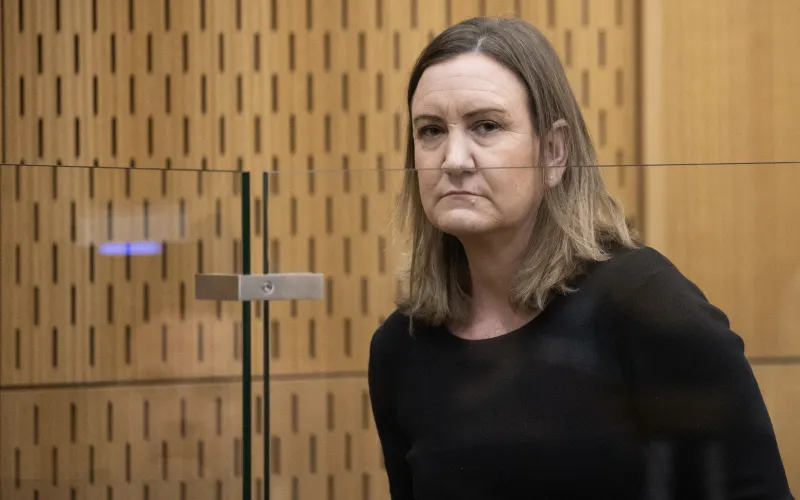
The trial began on the 17th of July, 2023. Prosecutor Andrew McRae argued that beneath Lauren’s genuine mental health struggles lay resentment toward her daughters, whom she saw as obstacles to her marriage. He pointed to texts in which she complained the children had drained the joy from her relationship, and evidence that she had searched online for ways to overdose children in the weeks before the murders.13
McRae told the jury Lauren gave a detailed confession after her arrest. She described the girls as unruly that evening, said something in her felt “triggered,” and retrieved cable ties from the garage. She told the girls they were making necklaces, then said she was dying and couldn’t leave them behind. She restrained Karla first, calling her “horrible” recently, then Liane, who reportedly protested and asked why she was doing this, then Maya. When the girls didn’t die immediately, she smothered them with a towel and blankets. She then attempted to end her own life with tramadol and a knife, but survived.
Defence attorney Kerryn Beaton portrayed Lauren as a loving mother in the grip of a severe mental breakdown, arguing she believed she had to take her daughters with her when she decided to die, rather than acting out of anger or resentment.
Graham testified via video link from South Africa. He recounted Lauren’s history of distressing comments and confirmed he later found unused zip ties at his mother’s home. He described her as non-violent, someone who always sought help after these episodes and seemed to recover. He said he never imagined she would harm the girls.
The prosecution presented a series of texts showing Lauren’s private anger and exhaustion, including references to wanting to “murder the twins” as a joke, fears of smacking Liane too hard, and complaints about her daughters’ behaviour sent the night before the killings. Her internet searches for child overdose methods, the most recent just a month before the murders, were also presented.
Psychiatric experts disagreed sharply. Dr. Susan Hatters Friedman and two other defence witnesses concluded Lauren was psychotic and delusional at the time, motivated by love rather than malice, and legally insane. Dr. Erik Monasterio, called by the defence but reaching a different conclusion, said Lauren was depressed but not psychotic, and did not meet the threshold for insanity. Prosecution psychiatrist Dr. Simone McLeavey testified that Lauren understood her actions and was driven by anger and a need for control, not altruism.
In closing, McRae argued Lauren was unwell but not so unwell she didn’t know her actions were wrong, and that she pressed on with the killings even after the girls didn’t die at once. Beaton countered that the deaths stemmed entirely from illness, not anger, describing a mother who could not bear to leave her daughters behind.14
The jury faced four possible verdicts: guilty of murder, guilty of infanticide, or not guilty by reason of insanity on either charge. After deliberation, they returned a majority verdict of 11 to 1, finding Lauren Dickason guilty of murdering Liane, Karla and Maya. She cried quietly as she left the courtroom.
Her parents later urged the public to learn to recognise the symptoms of postpartum depression. In a statement of her own, Lauren said she slept with three teddy bears embroidered with her daughters’ names, to remember, she wrote, “all the wonderful cuddles my girls used to give me.”
Lauren Dickason was sentenced on 26 June, 2024, to 18 years’ imprisonment, served as three concurrent sentences with no minimum non-parole period. Justice Cameron Mander ruled that a life sentence would have been “manifestly unjust” given that her severe mental illness was found to be the cause of her actions, not just a contributing factor. Lauren is eligible for parole after serving a third of the sentence, around six years.
Footnotes:
- Bay of Plenty Times, 20 July, 2023 – “Gruelling Fertility Battle Recounted”
- TimesLIVE, 17 September, 2021 – “They Waited Years for Those Children”
- Bay of Plenty Times, 19 July, 2023 – “Husband Tells of Tragic Find”
- Cape Community, 17 September, 2021 – “Shock After 3 Young Sought
- CE Noticias Financieras, 17 September, 2021 – “Mom Killers Her Three Young Daughters Just Days After Moving to New Zealand”
- IOL, 17 September, 2021 – “Mom Arrested After 3 Young Sisters Murdered in New Zealand”
- SowetanLIVE, 17 September, 2021 – “I Am Shattered”
- Greymouth Star, 28 July, 2023 – “Psychiatrist Reveals Killer Mums Preoccupation”
- MailOnline, 17 July, 2023 – “Disturbing Texts Mum Sent Friends”
- Bay of Plenty Times, 18 July, 2023 – “Murder Accused Resentful of Kids”
- DispatchLIVE, 23 September, 2021 – “Simultaneous Vigil in New Zealand and SA for Slain Dickason Children”
- Greymouth Star, 2 June, 2023 – “Mum to Plead Insanity”
- Greymouth Star, 18 July, 2023 – “Court Hears Dickason’s Husband’s Interview”
- Weekend Herald, 12 August, 2023 – “Fate of Alleged Triple Murderer Set to be Decided”


Comments: