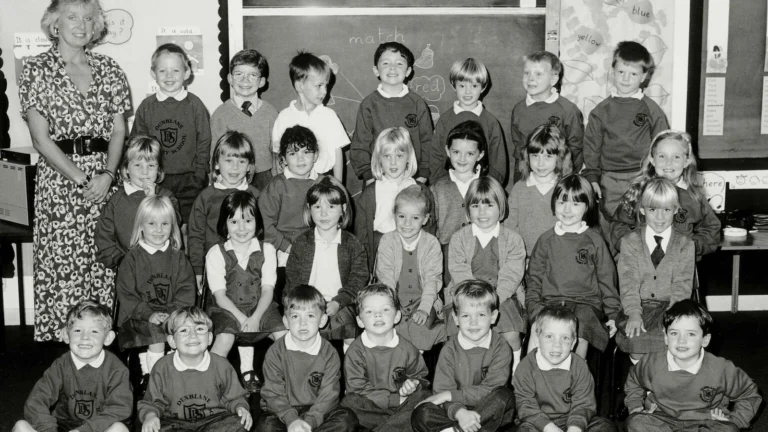
Dunblane is a close-knit town of around 10,000 people, situated on the edge of the Scottish Highlands yet well within reach of the country’s major cities. It sits in a fold of green hills above the River Allan, a few miles north of Stirling. In the 1990s it was the kind of commuter town where people moved to raise families. It was safe, quiet, and small enough that most people knew their neighbours. The children who attended Dunblane Primary School had grown up together. Many of their parents had grown up here too. It was not the kind of place where terrible things happened.
On the morning of 13 March 1996, that changed forever.
Thomas Watt Hamilton was born in Glasgow on 10 May 1952. Shortly after his birth, his parents separated and later divorced. He and his mother moved in with her adoptive parents in Cranhill, Glasgow, and in 1956, when Hamilton was four-years-old, he was formally adopted by them. His name was changed to Thomas Watt Hamilton. He grew up believing that his natural mother was his sister. The family relocated to Stirling in 1963, and Hamilton spent the rest of his life in the area. His adoptive mother died in 1987. By 1996 he was living alone at 7 Kent Road, Stirling – a loner in a community that had long since grown wary of him.1
In 1973, Hamilton was appointed assistant leader of the 4th/6th Stirling Scout group. Within months, complaints began to emerge about his conduct. Parents raised concerns that boys had been ordered to sleep in close proximity to Hamilton inside his van during expeditions. On 13 May 1974, his Scout Warrant was withdrawn and he was blacklisted by the Scout Association, meaning he could never hold another appointment within the organisation. Hamilton would spend the next two decades attempting to reverse that decision, writing letters to officials and politicians, but he was rebuffed at every turn.2
Undeterred, he redirected his attention towards setting up and running boys’ clubs. Between 1981 and 1996 he organised and ran fifteen such clubs across the area, including the Dunblane Rovers, the Dunblane Boys Club, and the Bannockburn Boys Club, many of which were held on school premises. He taught gymnastics and sports, and took large numbers of photographs and video footage of the boys in attendance. Many of the images focused on the boys’ bodies and Hamilton had insisted that they wear particularly revealing swimwear. As the years passed, whispers began to circulate. Parents removed their sons from his clubs. Complaints were made to police. Detective Sergeant Paul Hughes, the former head of Central Scotland Police’s child protection unit, wrote a report recommending that Hamilton’s firearm licence be revoked on account of his “unsavoury character” and “unstable personality.” No action was taken. There was no concrete evidence of a criminal offence.3

Hamilton had obtained his first firearms certificate in his mid-twenties. Over the following two decades he bought progressively more weapons and joined several gun clubs, working diligently on his accuracy. In the six months prior to March 1996 he stepped up his rate of ammunition purchases and increased his attendance at gun clubs. In the weeks before the massacre, an anonymous nine-year-old boy later told police that Hamilton had been questioning him weekly for two years about the layout of the school’s gymnasium and the daily routine of the pupils. Those questions stopped one week before the attack.4
Hamilton had applied to work as a volunteer at Dunblane Primary School and had been turned down. Increasingly paranoid and isolated, he sent packages to politicians, newspapers, and television stations containing letters in which he insisted he was not a pervert and that a conspiracy was being waged against him. He wrote to Queen Elizabeth II, requesting her personal intervention to restore his standing. His letter read, in part: “I turn to you as a last resort and am appealing for some kind of intervention to help me regain my standing in society.” The day before the massacre, he mailed fresh copies of these letters to television stations and newspapers. His mother later told police he had visited her that evening and had seemed perfectly normal. He gave no indication of what he intended to do the following morning.
It was around 8:15AM on the 13th of March, 1996, when a neighbour saw Thomas Hamilton outside his home on Kent Road, scraping ice from his white van. He was wearing black combat trousers, a dark jacket, and a dark woolly hat. He appeared unremarkable. No different from any other morning. A short while later, he drove in the direction of Dunblane.
Hamilton’s plan had been to arrive at Dunblane Primary School in time for morning assembly. The school was one of the largest in Scotland, with 640 pupils, and the assembly hall could not accommodate all of them at once. That morning, Primary 1, 2, and 3 attended morning assembly from 9:10 to 9:30AM. Hamilton arrived later than he had intended. There had been roadworks on the route and he had been delayed by a matter of minutes. He had missed the assembly by the time he pulled his van into the school car park.
He retrieved a pair of pliers from the van and walked to a telephone pole at the edge of the car park, cutting the wires. The pole served not the school itself but a number of surrounding homes. He then donned a pair of ear defenders, picked up a large black bag, and attached four holsters to his body. In the bag and holsters he was carrying four guns – two Smith and Wesson .357 revolvers and two 9mm Browning HP pistols – and 743 rounds of ammunition. He had etched his own markings onto his parabellum cartridges to speed up reloading. He crossed the car park and entered the building through a door on the west side.
Primary 1 had just returned from assembly. The children had changed into their PE kits and gathered in the gymnasium for their first lesson of the morning. There were 28 pupils in total, 25 of them five-years-old and three of them six-years-old. Their class teacher was Gwen Mayor, 45, a respected and well-loved member of staff who had taught at the school for years. She was due to be relieved in a few minutes to attend a meeting with the headmaster. Eileen Harrild, the part-time PE teacher, was in the gymnasium laying out equipment when Hamilton walked in.
Harrild did not have time to speak. Before she could ask Hamilton who he was or why he was there, he opened fire. She raised her arms and was shot in both forearms, the right hand, and the left breast. In a state of shock, she stumbled towards the gymnasium storeroom. A number of terrified children followed her. Mary Blake, a supervisory assistant, was shot in the head and legs but managed to reach the storeroom, pushing children ahead of her as she went. Some of those who made it into the storeroom had already been shot. The two women, who were both seriously wounded, did what they could to console the injured children as the shooting continued on the other side of the door. Blake later remembered how one child said simply: “What a bad man.”5
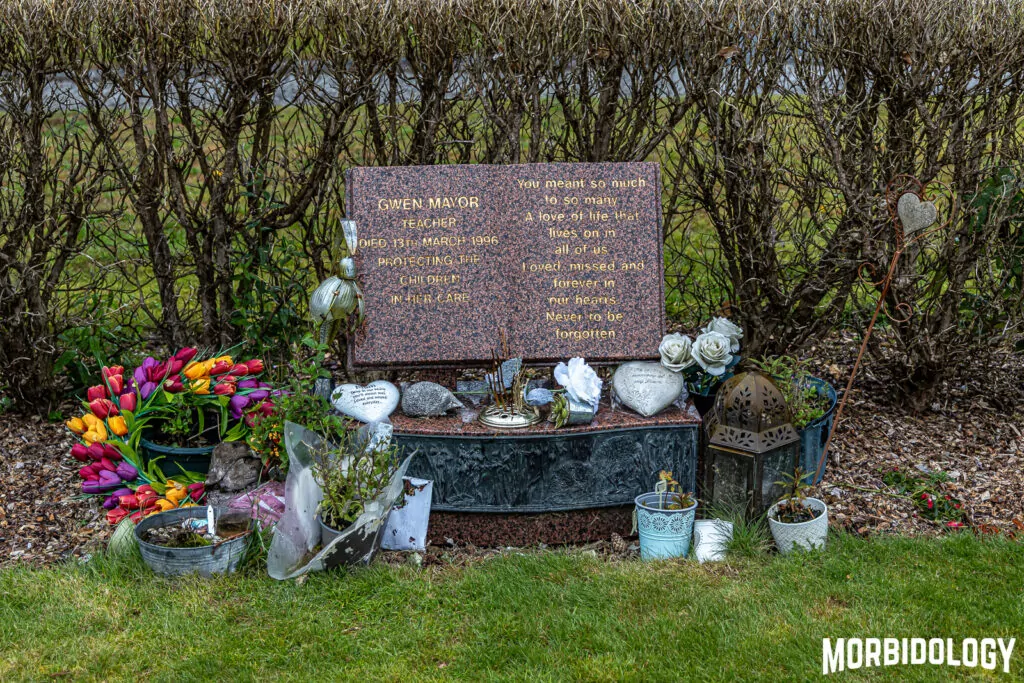
Gwen Mayor was shot several times and died almost instantaneously. It would later be noted by the first school staff to reach the gymnasium that she appeared to have died trying to shield her pupils.
Hamilton moved through the gymnasium, firing from three different positions. He spread his fire as he entered, then walked to the middle of the room and fired again, then moved to the far end. At one point he walked in a semi-circle and fired systematically at a group of children who had either been wounded or had fallen to the floor during the chaos. He stood over them and fired at point-blank range. A little boy who had left the class to fetch a pair of scissors looked through the gymnasium window and was spotted by Hamilton, who fired through the glass, injuring the boy with shattered fragments.6
Amy Hutchison, who was five-years-old, later described what she could remember: “We were skipping around. I don’t remember the pain of being shot. I don’t remember the noises. I don’t remember sounds. I remember my leg turning to jelly and falling to the floor.” She was treated in hospital for six weeks.7
A teacher passing along a corridor in the main building was grazed in the head by a bullet. Hamilton exited through a fire exit and fired towards the Primary 7 portable classroom of Kay Gordon, who ordered her pupils to the ground. Nine bullets struck the classroom; some passed through the walls, and one went through the back of a chair that a child had vacated moments earlier. Miraculously, none of those pupils were harmed. Hamilton returned to the gymnasium and continued firing.8
In total he fired 105 shots. Seven times he reloaded one of the Browning pistols. He had loaded the parabellum cartridges with four different types of bullet and had etched his own markings onto them to speed the process. Around five seconds after re-entering the gymnasium, he set the Browning aside, picked up one of the Smith and Wesson revolvers, placed the barrel in his mouth, and pulled the trigger.9
The entire attack lasted approximately three minutes. Hamilton had shot 32 people a total of 58 times. Sixteen people were killed inside the gymnasium. One child died on the way to Stirling Royal Infirmary. Fifteen others were injured.
Headmaster Ron Taylor was among the first to reach the gymnasium. What he and the other staff members found there was beyond comprehension, but they did not stop. They tended to wounds and stayed with the dying until emergency services arrived approximately fifteen minutes later. Taylor would later be described by police as a hero for the calm and measured way in which he managed the school in the aftermath, looking after his 700 pupils and staff in a state of profound shock. He would carry great personal guilt for years to come. “Evil visited us today,” he told the press that afternoon. “We don’t understand it, and I guess we never will.”10
Ambulance crews and police converged on the school. The injured were triaged at the scene before being rushed to Stirling Royal Infirmary, where operating theatres had been cleared of planned surgical cases in anticipation of their arrival. Four children had sustained potentially fatal wounds. Additional teams arrived from Falkirk and District Royal Infirmary. By approximately 11:10AM, all of the injured had reached hospital. Some were subsequently transferred to the Royal Hospital for Sick Children in Yorkhill, Glasgow, for specialist treatment. One five-year-old girl, Amie Adam, was in critical condition after surgery to her shattered thigh. Doctors warned she might be permanently disabled.11
Parents had begun arriving at the school gates as word spread through the town. A senior police officer addressed the gathering crowd and asked that only the parents of children in Gwen Mayor’s class come forward. He directed them to a large home overlooking the school. The parents filed in, filling the kitchen, the living room, and the hallway. After about an hour they were bussed to the school and led into the staff room. One of them later recalled: “It was torture.” One by one they were taken out and told what had happened to their child. The parents of the wounded were called out first. Then the parents of those who had not survived.12
One mother, unable to bear the wait, broke through the police cordon and ran into the school. She fainted on the gymnasium floor when she found her daughter, who had been shot in the neck. Isabel Wilson, whose daughter Mhairi was among those killed, later recalled being told the news: “We went into the room with a police officer and a social worker. He said my daughter was one of the ‘casualties.’ I learnt that he had two small daughters of his own and he couldn’t bring himself to say my daughter was dead.”13
Among the pupils who were on school grounds that morning but were unharmed was an eight-year-old boy named Andy Murray. He and his brother Jamie, who also attended the school, took shelter under a desk in the headmaster’s office. Murray would go on to become Britain’s most successful tennis player. He has rarely spoken about the events of that day in interviews, saying he was too young to fully understand what was happening at the time. “Anyone who comes from a small town and achieves something puts that town on the map,” he said years later. “In Dunblane’s case, it is especially important.”
The seventeen people who lost their lives that morning were:
Gwen Mayor, 45: Gwen Mayor grew up in Great Harwood, Lancashire, and trained as a teacher before moving to Scotland with her husband Rodney in the 1970s. They had two daughters, Esther and Deborah. She had taught at Dunblane Primary for years and was regarded by pupils, parents, and colleagues alike as warm, patient, and deeply committed to her class. She was due to hand Primary 1 over to another teacher that morning for a few minutes while she attended a meeting with the headmaster. She never made it. Evidence at the scene indicated she died trying to shield her pupils. More than 500 people attended her funeral at Dunblane Cathedral. Her colleague Stuart McCombie addressed the children in the congregation: “Boys and girls, when you think of Mrs. Mayor, be happy.”14
Victoria Elizabeth Clydesdale, 5: Victoria is buried in Dunblane Cemetery. In the STV documentary broadcast on the first anniversary of the massacre, her family spoke of the lasting void left by her death. A photograph taken at the memorial garden in the years following shows her younger brother Connor, then aged three, reaching toward the wind chimes placed at her grave.
Emma Elizabeth Crozier, 5: Emma had been baptised alongside her closest friend Joanna Ross, and the two girls were inseparable throughout their short lives. Their minister described them both as “bright little girls, wee sparklers, little buttons.” Emma and Joanna were buried on the same day. In death, as in life, they were together.15
Melissa Helen Currie, 5: Melissa had only recently moved to Dunblane from Braemar, in the Cairngorms. Her parents were Graham and Helen Currie, and she had at least one younger brother. Her closest friend at the school was Charlotte Dunn, and the two girls were inseparable. A joint funeral service was held for Melissa and Charlotte, attended by more than 600 mourners.
Charlotte Louise Dunn, 5: Charlotte’s family had moved to Dunblane from the West Midlands in 1995. She had a brother named Alex, and had written letters back to her old friends telling them how much she loved Scotland, even though she missed them. She became best friends with Melissa Currie almost immediately. She loved teddy bears; her headstone is carved in the shape of a panda. She and Melissa were buried together.
Kevin Allan Hasell, 5: Kevin lived in Hillside Avenue in Dunblane. He was, by those who knew him, described as a lively and cheerful little boy. His closest friend outside school was a boy named Robbie Hurst. He is buried in Dunblane Cemetery.

Ross William Irvine, 5: Ross is among the thirteen children buried in the dedicated section of Dunblane Cemetery alongside their teacher. Beyond his name and his place in that cemetery, little has been placed on the public record by his family, a privacy that has been respected.
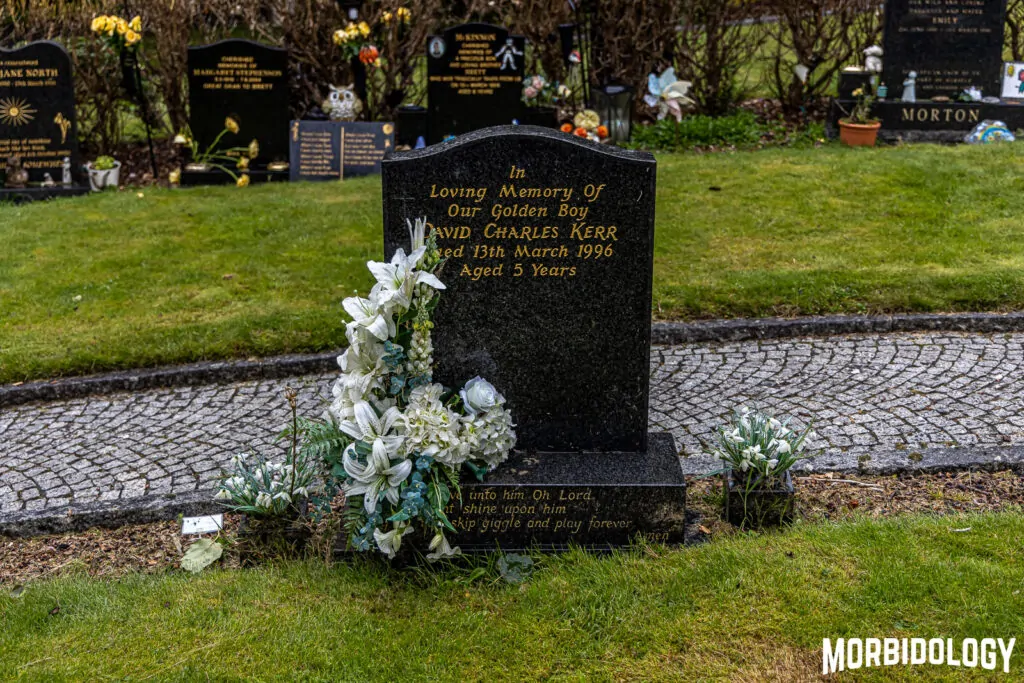
David Charles Kerr, 5: David’s funeral at the Church of the Holy Family in Dunblane was the first of the week-long series of burials, held on 19 March. His family has kept his memory private in the decades since.
Mhairi Isabel MacBeath, 5: Mhairi’s mother, Isabel Wilson, was one of the parents directed to the house overlooking the school on the afternoon of 13 March, and one of the last to be told what had happened to her daughter. She later described the moment to the Sunday Mail: the police officer who came to tell her, she said, had two small daughters of his own, and could not bring himself to say the word “dead.” He told her Mhairi was one of the casualties. Isabel Wilson understood.
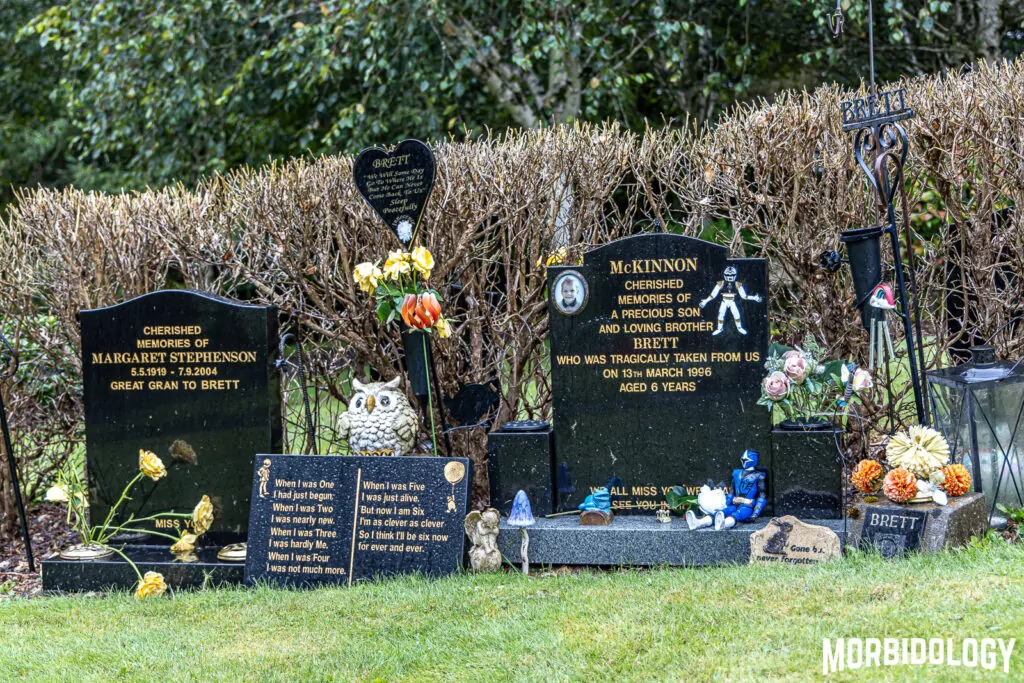
Brett McKinnon, 6: Brett was the oldest of the sixteen children killed, having turned six on 17 January, just weeks before the massacre. He lived close to school and had been friends with both Joanna Ross and John Petrie, who lived nearby. His aunt, Katrina Joseph, travelled from North America to Scotland to help bury him. At his funeral, the Reverend Moira Herkes read a verse by A.A. Milne: When I was one, I had just begun / When I was two, I was nearly new. It ended: But now I’m six, I’m as clever as clever / So I think I’ll be six now forever and ever. Pipers around the world played in his memory the following month.
Emily Morton, 5: Emily is among those buried in Dunblane Cemetery. Her family has chosen to keep her memory private, and little has been placed on the public record.
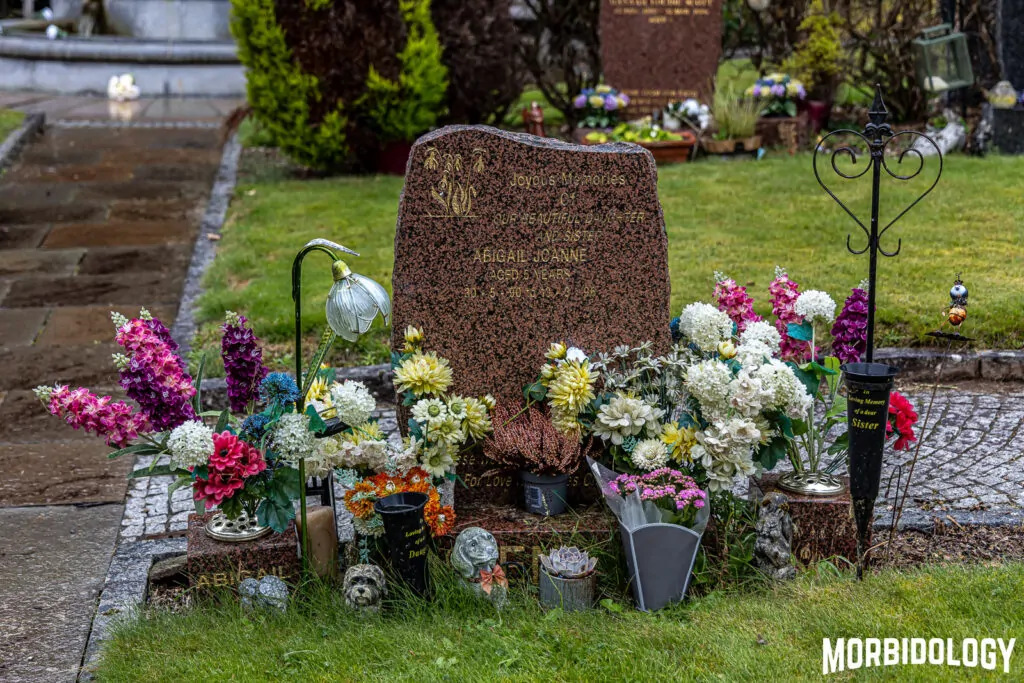
Abigail Joanne McLennan, 5: Abigail was the daughter of Duncan and Elizabeth McLennan. She had two sisters and the family had only recently returned to Scotland after living abroad, in the Far East. Her father Duncan became one of the most prominent voices among the bereaved parents, and his words – “We can’t get our children back. We can do the best we can to make sure it doesn’t happen again” – were carried in newspapers across the country. Abigail had long blond hair.16
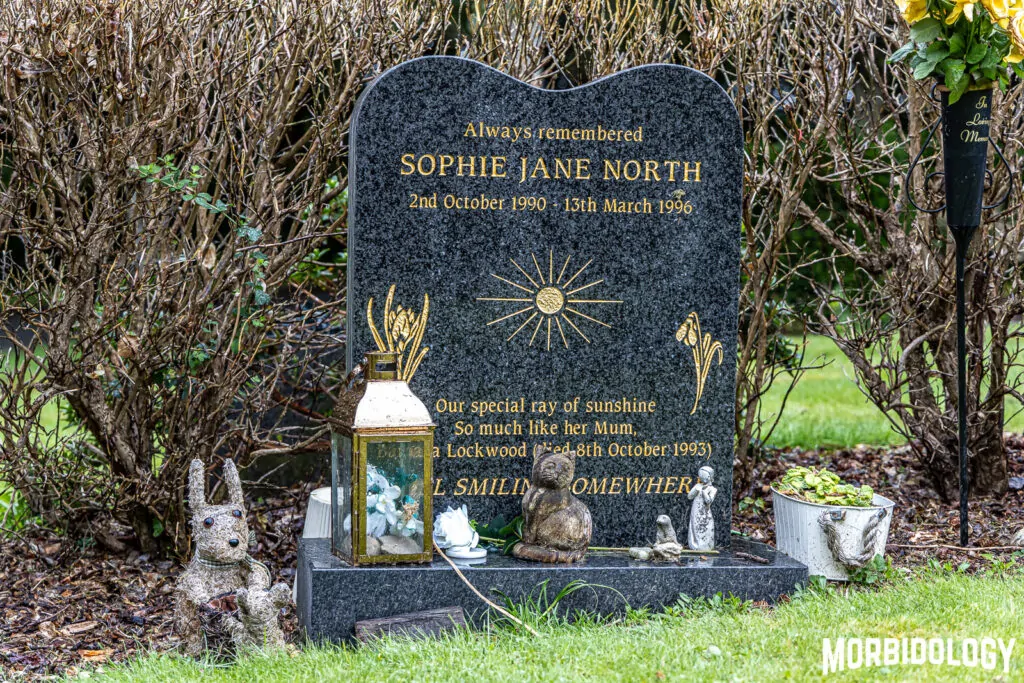
Sophie Jane Lockwood North, 5: Sophie had already known profound loss before 13 March 1996. Her mother, Barbara, had been diagnosed with breast cancer shortly after Sophie’s birth and died when Sophie was not yet three. Father and daughter had become, in the words of those who knew them, an inseparable team. Sophie’s father, Dr. Mick North, described her as “a lively, inquisitive, popular girl with huge brown sparkling eyes and a cheeky grin.”17 A snowdrop cultivar found growing in a Dunblane garden was renamed Sophie North in her memory.
John Petrie, 5: John was described by those who knew him as a bright, outgoing little boy with a cheeky face. He was a close friend of Brett McKinnon. He is buried in Dunblane Cemetery.
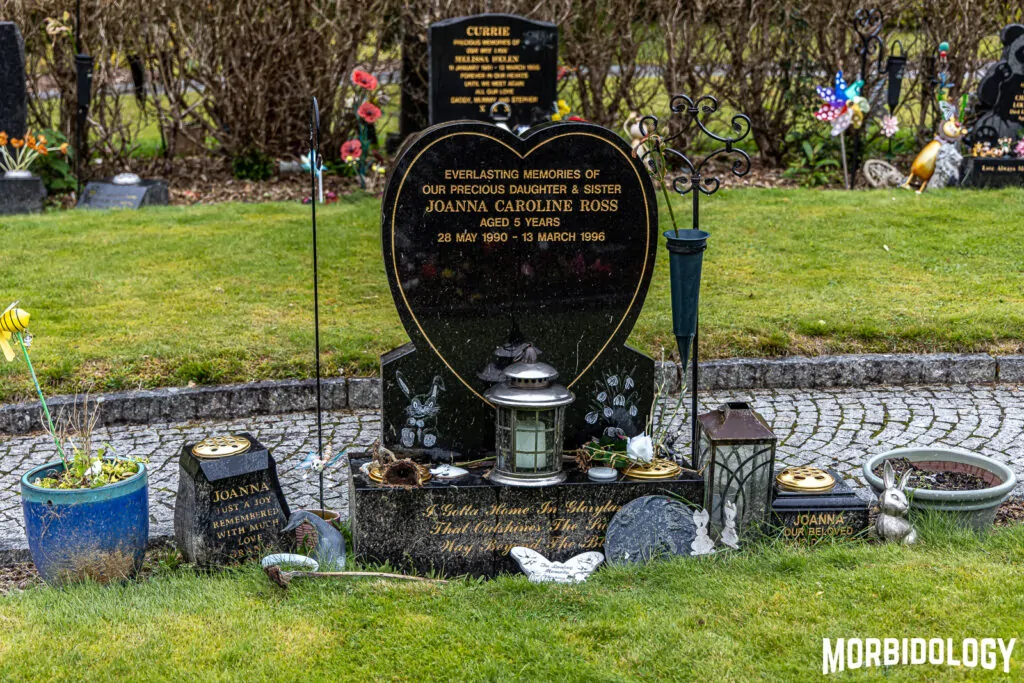
Joanna Caroline Ross, 5: Joanna lived on George Street in Dunblane with her parents, Pamela and Kenneth Ross. She had been baptised alongside her best friend Emma Crozier, and the two were rarely apart. She had a younger sister who was just a few months old when Joanna was killed, and had been friends with Brett McKinnon, who lived nearby. She and Emma were buried on the same day. Her older sister Alison, who was a pupil at the school the morning of the massacre, has in adulthood become a vocal advocate for the community’s memory. “It looms over us all,” Alison has said. “It needs to be remembered so that everyone’s aware that we are still here, still getting on with our lives.”
Hannah Louise Scott, 5: Hannah was born on 28 September 1990. Her parents were Karen and David Scott, and she had two sisters, Katrina and Rebecca. She is buried in Dunblane Cemetery.
Megan Turner, 5: Megan was born in Backcroft. Her parents were Karen and Willie Turner. Her mother described her simply: “Full of life, always running and jumping. Megan stood on her head more than she stood on her feet.”18
Pathologist Professor Anthony Busuttil was charged with the grim task of examining those who had died and formally informing their families. Most of the victims had suffered between one and seven gunshot wounds. He later said the severity of the injuries was worse than anything he had encountered in his career. He also conducted the post-mortem examination of Hamilton himself, running extensive tests to search for any physical explanation for his actions – evidence of a brain tumour, alcohol, drugs, viral infection, lead poisoning. He found nothing. There was no physical cause. No one would ever know with certainty what drove Thomas Hamilton to walk into that gymnasium on the morning of 13 March 1996.
Two days after the massacre, on the evening of 15 March, a vigil and prayer session was held at Dunblane Cathedral. Around 5,000 people wound through the streets and into the grounds of the 13th-century cathedral. They came from Dunblane and from well beyond it – people who had never known the victims but who could not stay away. The service was conducted by the Reverend Colin McIntosh and was broadcast live by the BBC.19
On 18 March, the United Kingdom observed a one-minute silence at 9:30AM., the approximate time of the attack. Rail stations, airports, shops, sports arenas, and broadcasters across the country fell still. It marked the beginning of a week of funerals. The families had requested privacy, and the media complied. Television cameras and press photographers stayed away from the ceremonies. The first funerals took place on 18 March. Emma Crozier and Joanna Ross were among those buried that day. Their minister, the Reverend William Gilmour, spoke of them simply: they had been bright little girls, he said.
On 19 March, David Kerr was buried at the Church of the Holy Family in Dunblane. Melissa Currie and Charlotte Dunn were laid to rest at Dunblane Cathedral later that morning, followed by Megan Turner and Hannah Scott. Further services were held across the following days. Wreaths in the shapes of cars, motorcycles, and Power Rangers lay beside small white coffins inside the ancient cathedral. Many of the children were buried in a dedicated area of Dunblane Cemetery. The final funeral of that long week was for Brett McKinnon, six years old. More than 500 people filled the cathedral for the funeral of Gwen Mayor.
Six days after the massacre, on 19 March, Hamilton’s body was cremated in a private ceremony. A police spokesman confirmed only that the service had been conducted far from Dunblane.
Dunblane Primary School reopened on 22 March, a little over a week after the attack. The gymnasium was demolished on 11 April 1996 and replaced with a memorial garden.
Seven months after the massacre, in October 1996, the families of the victims organised their own memorial service at Dunblane Cathedral. More than 600 people attended, including Prince Charles. The service was broadcast live on BBC1 and was conducted by James Whyte, a former Moderator of the General Assembly of the Church of Scotland. Television presenter Lorraine Kelly, who had reported on the massacre for GMTV in the immediate aftermath and had formed lasting friendships with many of the families, was a guest speaker. It was a deeply personal occasion, designed and controlled by the bereaved community, not by officials or broadcasters.20
That December, with the consent of Bob Dylan, a Scottish musician named Ted Christopher wrote a new verse for Knockin’ on Heaven’s Door in memory of the Dunblane children and their teacher. The recording featured brothers and sisters of the victims singing the chorus, with Mark Knopfler on guitar. It was released on 9 December 1996 and reached number one in the UK singles chart on 15 December. The proceeds went to children’s charities.
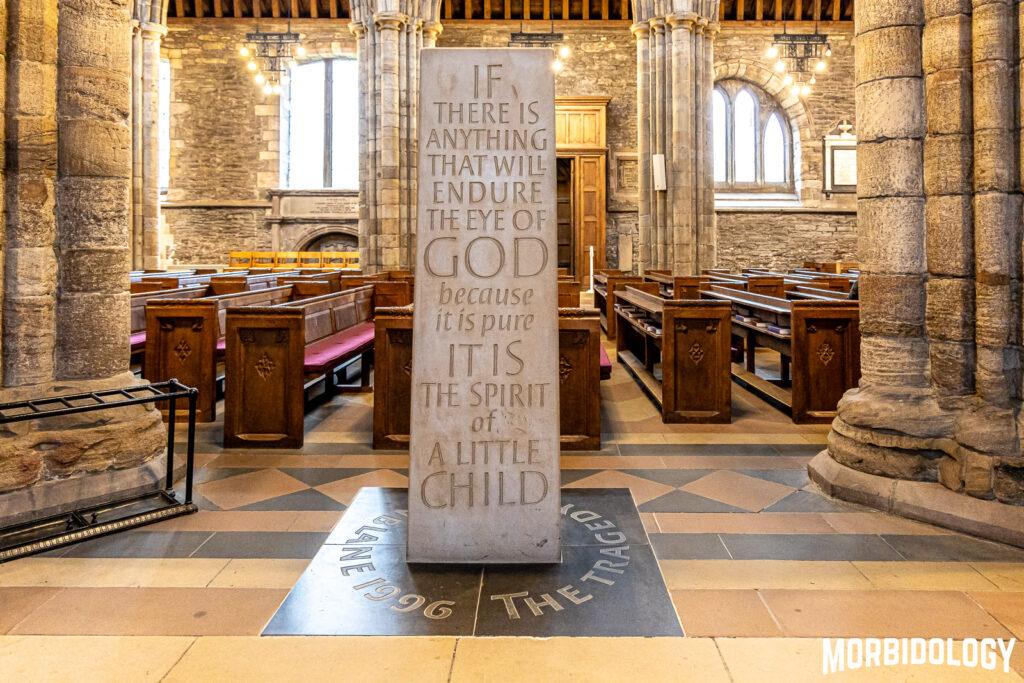
In March 2000, a standing stone was placed and dedicated in Dunblane Cathedral. Quotes were carved into all four sides of the two-metre monument. Stained glass windows in memory of the victims were placed in three local churches: St Blane’s, the Church of the Holy Family, and the nearby Lecropt Kirk, as well as at the Dunblane Youth and Community Centre, which opened in September 2004 – built with the donations that had poured into the town in the aftermath of the massacre.
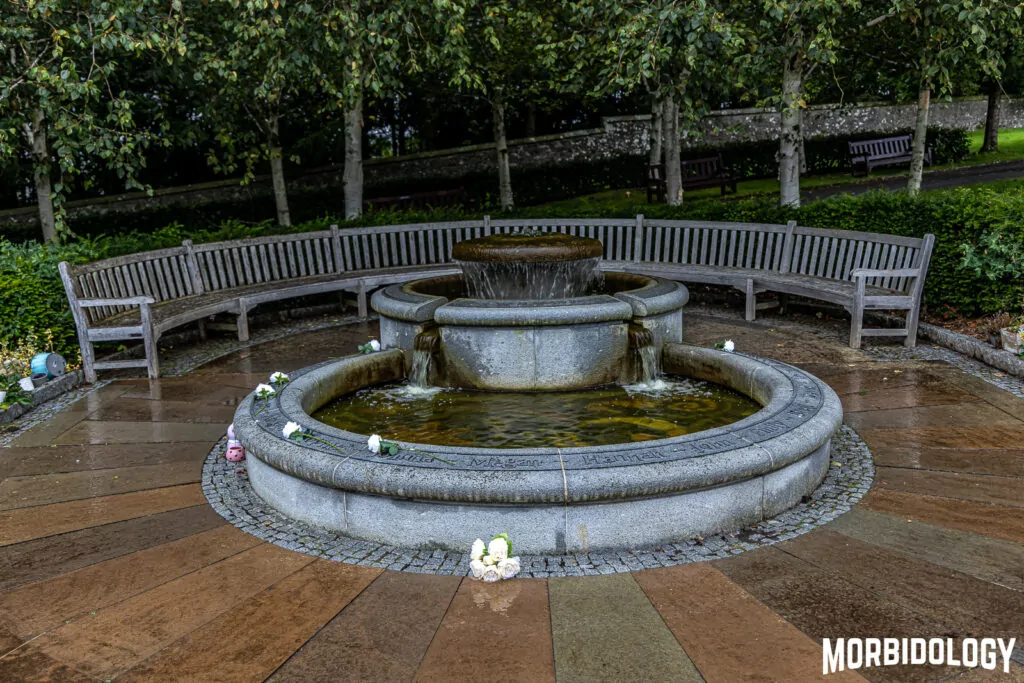
On 14 March 1998, two years to the day after the attack, a memorial garden was opened at Dunblane Cemetery, where Gwen Mayor and twelve of the children are buried. The garden features a fountain and a plaque bearing the names of all seventeen who died. In August 1997, two varieties of rose were planted at the centre of a roundabout in the town.
They had been developed by Cockers Roses of Aberdeen: the Gwen Mayor rose, and the Innocence rose, in memory of the children. A snowdrop cultivar found growing in a Dunblane garden in the 1970s was renamed Sophie North in memory of one of the victims.
In the days following the massacre, investigators examined Hamilton’s background in detail. What they found raised profound questions about how he had been permitted to continue holding a firearms certificate. Hamilton had legally owned guns for over twenty years. The year before the massacre, Central Scotland Police had renewed 340 firearm licences in a single exercise, including Hamilton’s, and had approved every one. Despite the written concerns of Detective Sergeant Paul Hughes, whose report recommending revocation of Hamilton’s licence had been filed and ignored, Hamilton had faced no legal obstacle to owning the weapons he used on 13 March.
Lord William Cullen, a senior member of the Scottish judiciary, was appointed to lead a public inquiry. The Cullen Report, published in October 1996, was damning. It identified failures in the system that had allowed Hamilton to retain his licence in the face of credible concerns. It recommended that the government introduce significantly tighter controls on handgun ownership and consider whether an outright ban on private ownership was warranted. It also called for improved school security procedures and stronger vetting of adults working with children.
In the immediate aftermath of the massacre, bereaved families and community members launched a campaign to ban private handgun ownership in Britain. They called it the Snowdrop Petition – the snowdrop being the only flower in bloom in early spring when the children were killed. The petition gathered over 700,000 signatures and was submitted to Parliament. A letter written by the mother of one of the slain children was printed in two national newspapers. In April 1996, a group of concerned citizens travelled to Downing Street to hand a petition signed by over 428,000 people directly to Prime Minister John Major.21
In February 1997, Parliament passed the Firearms (Amendment) Act 1997, banning all cartridge ammunition handguns with the exception of .22 calibre single-shot weapons in England, Scotland, and Wales. Later that year, Tony Blair’s incoming Labour government went further with the Firearms (Amendment) (No. 2) Act 1997, extending the ban to .22 calibre weapons as well. The UK government also instituted a buyback programme, compensating licensed owners for surrendered weapons. A six-member advocacy group called the Gun Control Network was founded in the aftermath and has remained active since.
The gun lobby had been wealthy and politically influential. It was, in the end, defeated.
The Dunblane massacre remains the deadliest criminal act involving firearms in United Kingdom history. In the nearly three decades since, the country has not experienced another school shooting. That is not a coincidence. It is a consequence of decisions made by bereaved parents, politicians, and a public that had decided enough was enough.
The families have continued to grieve, quietly and publicly. Mick North, whose daughter Sophie was killed, became one of the most prominent voices for gun control in Britain and in 2018 organised an open letter from Dunblane survivors and families to the students of Marjory Stoneman Douglas High School in Parkland, Florida, in the wake of the shooting there. “Never let anyone forget,” the letter read. “There will be attempts to deflect you, to divide you and doubtless to intimidate you, but you’ve already shown great wisdom and strength.” Joanna Ross’s sister Alison has said: “It looms over us all I think and it gets a bit hard to accept. It needs to be remembered so that everyone’s aware that we are still here, we are still getting on with our lives and we didn’t just fade into the background either.”22
The Dunblane Centre, built with money donated from around the world in the aftermath of the massacre, opened in 2004. Its windows are etched in gold leaf: one pane for each of the children who died, and one for their teacher. In 2025, Gwen Mayor was posthumously honoured with the Elizabeth Emblem, awarded to individuals who have shown outstanding service or sacrifice.
A snowdrop cultivar renamed Sophie North blooms each spring in Dunblane. The Gwen Mayor rose and the Innocence rose grow at the centre of a town roundabout. Twelve children and their teacher lie in a dedicated section of the cemetery on the edge of town, beneath a fountain engraved with their names. The gymnasium where they died was demolished and in its place there is a garden.
They were five and six-years-old. It was a Wednesday morning in March and they were at school. They should have been safe.
Footnotes:
- The Public Inquiry into the Shootings at Dunblane Primary School on 13 March 1996
- STV News, 11 March, 2016 – “Dunblane massacre: Timeline of school shooting that shocked a nation”
- The Herald, 7 June, 1996 – “Killer Thomas Hamilton Was Described Five Years Ago”
- Independent, 10 March, 2016 – “Dunblane Massacre: Remembering the School Shooting 20 Years Later”
- The Daily Record, 30 May, 1996 – “We Heard Shots and Screams”
- The Independent, 30 May, 1996 – “Happy Children Cut Down in Minutes”
- The Times, 5 March, 2016 – “I Felt Enormous Guilt”
- The Independent, 1996 – “Above All, Let us be Rid of This”
- The Kingston Whig-Standard, 30 May, 1996 – “Hearing Reconstructs Dunblane Massacre”
- The Daily Mirror, 20 November, 1998 – “Head Ron to Leave Dunblane”
- The Deseret News, 15 March, 1996 – “So Full of Life”
- The Daily Record, 29 February, 2016 – “Survivors Remember Dunblane School Massacre”
- The Times, 28 February, 2016 – “Scars are my Story”
- The Spokesman-Review, 22 March, 1996 – “Dunblane Buries Last of Shooting Victims
- Deseret News, 17 March, 1996 – “Mothers of the Survivors are Grateful”
- The Philadelphia Inquirer, 16 September, 1996 – “Parents of Slain Children”
- The Observer, 12 February, 2006 – “Focus: Dunblane”
- The Deseret News, 15 March, 1996 – “So Full of Life”
- Sunday Star Times, 17 March, 1996 – “A Numbed and Dazed Town Asks: Why?”
- The Herald, 9 October, 1996 – “Moving Tribute”
- The Sunday Times, 14 July, 1996 – “For Pity’s Sake”
- The Guardian, 13 March, 2018 – “We Will Light 17 Candles”



Comments:
then the eye of god is strengthened with the blood of children, that monument explains many things